Motor trade Case Study: How Our First Live Customer, Gem Tyres in Ely, Proved That ‘Nothing Ventured, Nothing Gained’
A first customer with a personal connection
Gem Tyres, Exhausts and Batteries in Ely, Cambridgeshire, was the first customer to go live with That Card Machine Guy.
That made the project particularly important to me. Gem Tyres is owned by my uncle and his girlfriend. In the kindest possible sense, he was duty bound to give me an opportunity to quote for the business.
But family connections only get you through the door.
The solution still had to work. The rates had to be competitive. The transition had to be straightforward. Most importantly, Gem Tyres needed to see a practical improvement rather than simply take my word for it.
They gave me the opportunity.
I then had to prove that reviewing their existing merchant services setup was worth their time.
The challenge: assuming your current rates are competitive
Gem Tyres already had a card machine provider. Like many small businesses, they believed the terms were competitive.
That is a reasonable assumption. If your card machine works and your provider has never caused a major issue, it is easy to leave things as they are.
The problem is that a merchant services agreement can contain more than one cost.
You may be paying:
A percentage fee on each transaction.
A fixed secure transaction charge.
Terminal rental.
Monthly account or service charges.
Fees that have changed gradually over time.
Charges that are no longer necessary for your current setup.
Individually, some of these costs can appear minor. Across a full year, they can make a noticeable difference to a small business’s cash flow.
Gem Tyres decided to test the assumption that their existing deal was already competitive.
That decision led to a full review of their card payment arrangements and a move to a more favourable setup.
A simple review with a clear outcome
The process began with a conversation about their current arrangements.
There was no complicated sales presentation. There was no pressure to change provider before the figures had been considered.
The aim was simple:
Understand how Gem Tyres accepted card payments.
Review the existing terms and charges.
Compare the available options.
Identify where costs could potentially be reduced.
Make the transition as easy as possible.
The review showed that the business could benefit from improved rates and the removal of certain charges.
The exact saving will depend on future card turnover and transaction volumes. However, Gem Tyres confirmed that the new arrangement put them on very favourable rates, with some charges no longer existing at all.
That is the value of analysing the full setup rather than focusing only on one headline percentage.
A rate can look competitive at first glance. The complete monthly cost may tell a different story.
The transition was simple and seamless
Changing payment provider can feel like an unnecessary distraction when you are running a busy garage.
You have customers waiting. Vehicles are on ramps. Staff are moving between the workshop and reception. The last thing you want is a complicated installation process or a long period of disruption.
Gem Tyres needed the transition handled properly.
That included arranging the new equipment, completing the setup and making sure the business could continue taking payments without unnecessary interruption.
The result was a smooth changeover.
As the team said in their Google review:
> "We thought that the terms we had with our card machine supplier were competitive but as they say ‘nothing ventured nothing gained’ so we gave Ben the chance to prove us wrong….and he did! We are now on very favourable rates, some charges no longer exist and the whole transition was taken care of. The process was simple and seamless. Saving money is always a factor for all businesses especially small ones like us. Highly recommend the service provided, what have you got to lose?'
That review captures the project well.
Gem Tyres did not need to take a risk based on a vague promise. They gave me the chance to analyse the existing arrangement. The figures showed that an improvement was possible.
Why payment reliability matters in a tyre centre
A card terminal is not just a piece of equipment on the counter.
For a busy tyre centre or garage, it is part of the customer journey. It is also part of the process that turns completed work into settled takings.
Gem Tyres provides tyre fitting and a wide range of vehicle services in Ely. The business offers same-day fitting, repairs, servicing, batteries, exhausts, brakes, wheel alignment and other vehicle checks.
That creates a practical need for payment technology that keeps pace with the workshop.
If your current terminal is slow, unreliable or expensive, then the impact can go beyond frustration.
A delayed payment can:
Hold up the customer at the counter.
Create a queue during busy periods.
Slow down vehicle collection.
Interrupt staff while they are handling workshop work.
Make the business appear less efficient.
Delay the movement of money into your business account.
When the ramps are full and customers are waiting, there is zero time for a sluggish terminal.
The benefits Gem Tyres now has available
The new setup gives Gem Tyres access to a range of features designed for busy businesses.
99.999% connectivity
Reliable connectivity matters when customers need to pay and vehicles need to leave.
The Dojo Go Max can use Wi-Fi and automatically switch to 4G if the broadband connection fails. This helps keep payments moving when the primary connection is unavailable.
No connectivity solution can remove every possible issue. However, automatic backup connectivity provides an important layer of resilience for eligible businesses.
Transaction times under two seconds
Average transaction times of under two seconds help reduce waiting at the till.
That matters when several customers arrive at once, when a vehicle is ready for collection or when the workshop team needs to move on to the next job.
Faster payments do not change the quality of the service Gem Tyres provides. They simply remove avoidable delay from the final stage of the transaction.
Next-day settlements
Next-day settlements can help improve visibility over cash flow.
Instead of waiting several working days for card takings, eligible businesses can receive payments the next working day, subject to terms and processing cut-off times.
For a small garage, faster access to takings can support everyday costs such as stock, wages, fuel and supplier payments.
Real-time reporting
Real-time reporting gives the business a clearer view of card activity.
This can make it easier to monitor takings, check transactions and reconcile payments against the day’s work.
The information is available through the business dashboard and mobile app, helping reduce reliance on manual checking.
Integrated payment options
Gem Tyres also has access to flexible payment options that can support the business as it develops.
These include:
✔ Tap to Pay on iPhone, where compatible
✔ Secure payment links
✔ QR code payments
✔ Business dashboard access
✔ Mobile reporting
✔ Modern contactless, chip and PIN payments
Payment links can be useful for deposits, invoices, follow-up payments or customers who are not standing directly at the counter.
Tap to Pay on iPhone can also provide an additional option for mobile work or as a backup payment method, subject to compatible hardware, software and terms.
A modern payment setup for an established local business
Gem Tyres was established in 1982. It has built its reputation through knowledgeable advice, competitive pricing and friendly service.
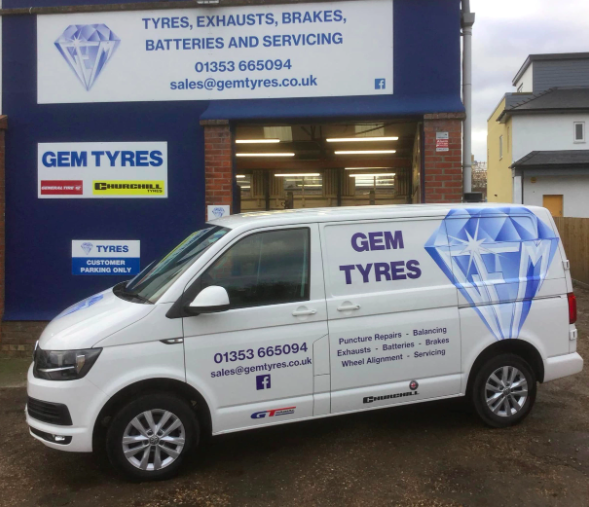
The business continues to offer local tyre expertise from its base on Lynn Road in Ely. It also serves customers from surrounding areas across Cambridgeshire.
That combination of established local service and modern payment technology is important.
A card machine should not replace personal service. It should support it.
Customers still want honest advice. They still want their vehicle looked after properly. They still want to deal with people who understand the motor trade.
The payment process should simply be fast, reliable and easy to use.
Part of wider motor-trade experience
Gem Tyres is the first live customer for That Card Machine Guy. It is also an important part of my growing experience in the motor trade.
I understand that garages, dealerships and workshops have different requirements from many other businesses.
A car dealership may process fewer but higher-value transactions. A workshop may need multiple terminals. A tyre centre may need speed at the counter and flexibility for mobile work.
The right solution depends on the business’s transaction profile, settlement requirements and current fees.
This case study sits alongside other motor-trade examples, including:
Jim Reid Vehicle Sales, another established vehicle business operating in the wider motor-trade sector.
These examples show why a proper review matters. There is no single best rate for every business. The right answer depends on how you trade, what cards your customers use and which fixed charges are included.
The lesson from Gem Tyres
The lesson is straightforward.
If you assume your current card machine deal is competitive, it may be worth checking.
If your equipment is reliable and your rates are genuinely strong, straightforward advice should confirm that.
If the review identifies unnecessary fees or a better arrangement, you can then make an informed decision.
Gem Tyres took the opportunity to find out.
They are now live with a payment setup offering more favourable rates, fewer charges, faster transactions, reliable connectivity and quicker settlements, with local personal support from someone they know.
For small businesses across Ely, Cambridgeshire and the wider UK, that is what a merchant services review should provide: clear information, practical improvements and no unnecessary pressure.
You can learn more about the card payment solutions available for UK businesses or contact That Card Machine Guy to arrange a review of your current setup.